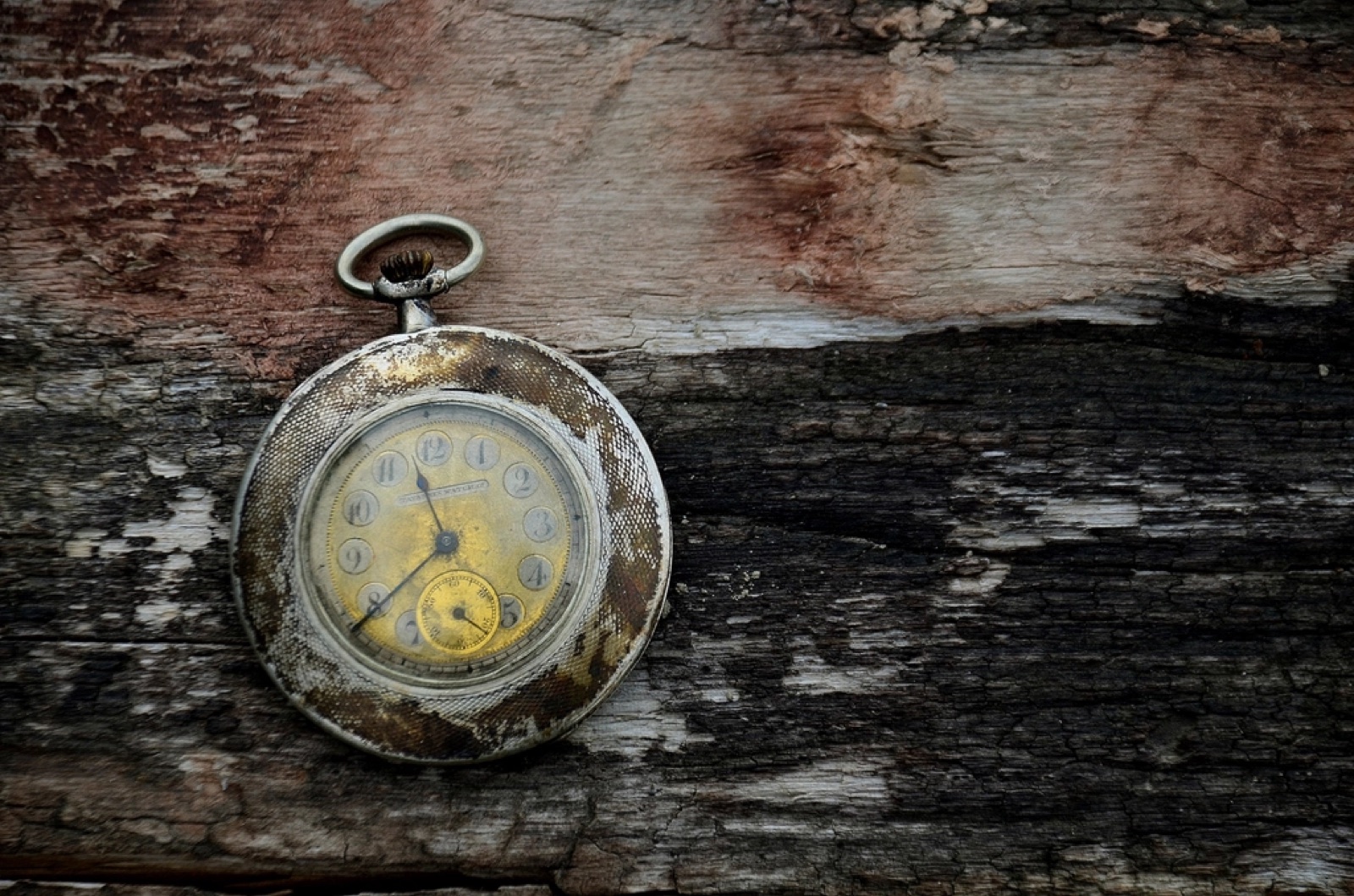
The watch he wound every morning
My father bought this pocket watch secondhand in 1984 from a man at the plant who needed the money more than the time. It was already sixty years old. He carried it every day for the next forty-one years — through two careers, one bypass, four grandchildren, and roughly fifteen thousand identical breakfasts. It is not valuable. We had it appraised once, to his enormous satisfaction: "Worthless," he reported, beaming. "Now nobody has a reason to take it."
It is a manual wind. That matters. Every morning of my childhood began with the same eleven seconds: coffee poured, paper folded, watch out of the pocket, wound — never at the table, always standing at the window — then back in, chain looped to the second buttonhole. He said a watch that winds itself is "a watch with no manners; it never asks."
In his last week, when his hands couldn’t manage it, he taught me the wind. Fourteen half-turns, stop when it resists, never force it. "It tells you when it’s had enough," he said. "Kindly learn the difference between it and me."
At the service we set it on the table beside his photograph, next to this card, and I watched people scan it and then look up with the particular expression of someone who has just heard his voice about the manners of watches. That is what this page is for. A watch on a table is an object. A watch with its eleven seconds attached is my father, at the window, at seven in the morning, forever.
The watch goes to his oldest grandchild, June, in 2031, when she turns eighteen. June: it is wound in the morning, standing up, looking out a window. Fourteen half-turns. It will tell you when it’s had enough. So will this story — but not yet.